6 Balancing Steps to Prepare a Berry and Vegetable Patch
Learning how to prepare a garden for a berry and vegetable patch begins with understanding that berries demand acidic soil while most vegetables thrive in neutral pH. The autumn air carries the scent of decomposing leaves, the ideal carbon source for building humus-rich beds. Your hands will work through clay, loam, or sand, transforming raw earth into a balanced growing system. This preparation determines whether roots will penetrate deeply or struggle in compacted layers. The process requires six distinct steps, each addressing soil chemistry, microbial activity, and structural integrity.
Materials
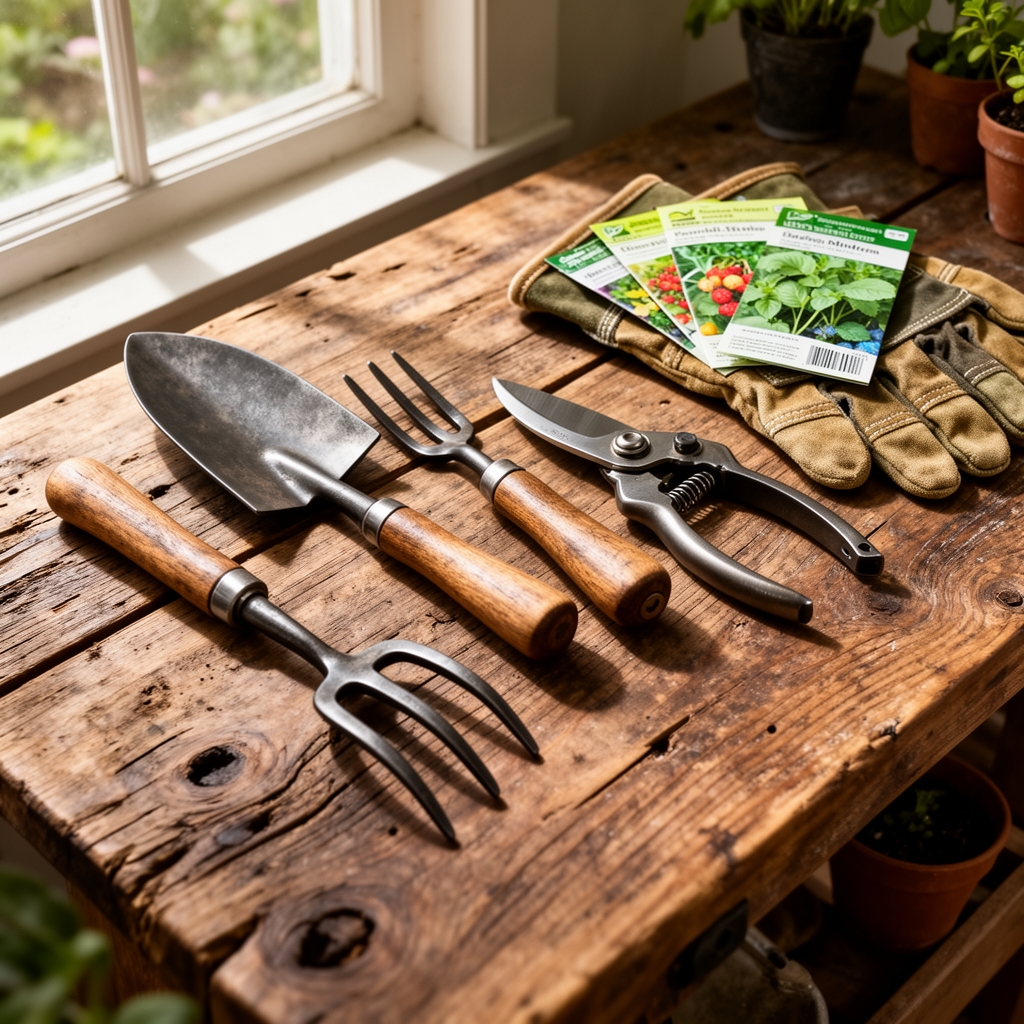
Berries require pH 4.5 to 5.5. Purchase elemental sulfur at 1 pound per 100 square feet to lower pH by one full point. Blueberries, raspberries, and strawberries need this acidic environment to access iron and manganese. Apply cottonseed meal (6-2-1 NPK) as a slow-release nitrogen source that maintains acidity.
Vegetables perform best at pH 6.0 to 7.0. Dolomitic limestone raises pH while adding calcium and magnesium. Use 5 pounds per 100 square feet to increase pH by one point in loam soil. For balanced fertility, incorporate alfalfa meal (3-1-2 NPK) and rock phosphate (0-3-0 NPK). Kelp meal supplies trace elements including boron, which prevents blossom-end rot in tomatoes and hollow heart in brassicas.
Both zones benefit from composted bark fines. These improve cation exchange capacity, the soil's ability to hold and release nutrients. Add mycorrhizal inoculant containing Rhizophagus irregularis at transplant time. This fungus colonizes 80 percent of agricultural crops, extending root systems by a factor of ten.
Purchase a soil test kit measuring pH, nitrogen, phosphorus, potassium, and organic matter percentage. Collect samples from six inches deep, avoiding the top two inches where decomposition skews readings.
Timing
Hardiness zones dictate preparation windows. Zones 3 through 5 require fall preparation, six weeks before ground freeze. This allows organic matter to decompose partially before spring. The freeze-thaw cycle breaks down soil aggregates, improving structure.
Zones 6 through 8 can prepare beds in fall or late winter, targeting eight weeks before the last frost date. Warm-season vegetables transplant two weeks after last frost when soil reaches 60 degrees Fahrenheit at four inches deep.
Zones 9 through 11 prepare beds in late autumn for winter growing seasons. Summer heat exceeds the optimal range for most vegetables, making November through March the prime production window.
Berry canes plant during dormancy. Bare-root raspberries and blackberries establish between November and March, depending on zone. Container-grown blueberries transplant year-round but root most aggressively in spring when auxin distribution peaks.
Phases
Sowing
Remove existing vegetation by cutting at soil level. Leave roots to decompose in place, preserving soil structure. Spray sheet mulch (cardboard or newspaper, eight sheets thick) across the entire area. Overlap edges by six inches to prevent light penetration.
Add four inches of finished compost over the sheet mulch. Compost must reach 131 degrees Fahrenheit during production to kill weed seeds and pathogens. Spread amendments based on soil test results. Incorporate sulfur into future berry zones and limestone into vegetable areas.
Pro-Tip: Water the layered bed thoroughly before covering with wood chips. Moisture activates cellulose-digesting bacteria that break down cardboard within 90 days.
Transplanting
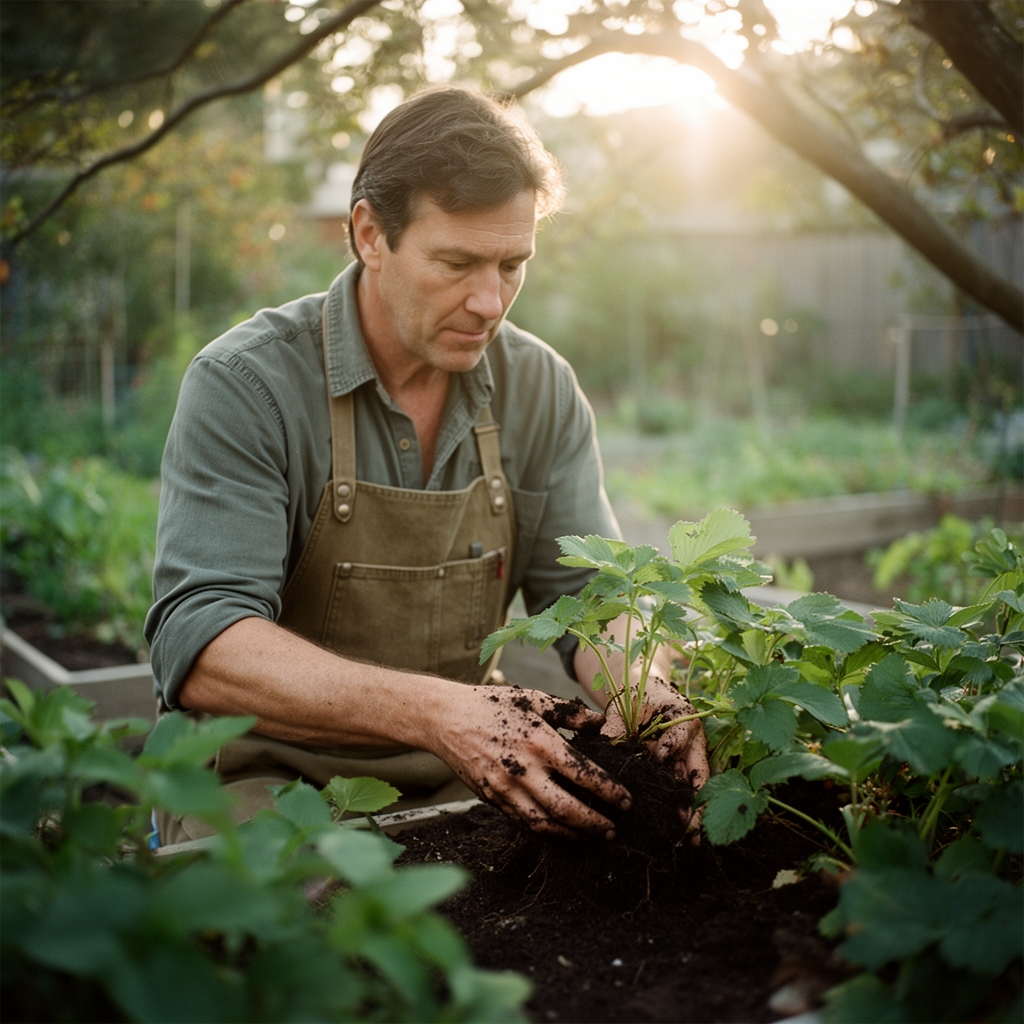
Dig planting holes twice the width of root balls. Berry bushes need holes 18 inches deep to accommodate fibrous root systems. Mix excavated soil with 50 percent compost and one tablespoon of mycorrhizal inoculant per plant.
Position blueberry crowns one inch above surrounding soil to prevent crown rot. Raspberry canes plant at the same depth they grew in nursery containers. Space blueberries 48 inches apart in rows 72 inches wide. Raspberries require 24-inch spacing with 60-inch row width.
Vegetable transplants establish at the same depth as container soil lines, except tomatoes. Bury tomato stems horizontally, leaving only the top four inches exposed. Adventitious roots form along buried stems, creating robust anchoring systems.
Pro-Tip: Prune raspberry canes to six inches at planting. This forces energy into root establishment rather than premature fruiting. First-year sacrifice yields 300 percent more production in year two.
Establishing
Apply three inches of aged wood chips around berries, keeping mulch six inches from canes. Wood chips decompose slowly, feeding fungal networks that berries prefer over bacterial-dominated soils. Replenish mulch annually as lower layers incorporate into topsoil.
Vegetable beds receive two inches of straw mulch after soil warms to 65 degrees. Earlier mulching delays warming in spring. Straw breaks down within one season, requiring renewal at each planting.
Install drip irrigation on 12-inch centers for vegetables and 18-inch centers for berries. Drip systems deliver water to root zones, reducing foliar disease pressure by 60 percent compared to overhead watering.
Pro-Tip: Inoculate legume seeds (peas and beans) with Rhizobium bacteria before sowing. These nitrogen-fixing bacteria reduce fertilizer needs by 40 percent while improving soil structure through root exudates.
Troubleshooting
Symptom: Interveinal chlorosis (yellow leaves with green veins) on blueberries.
Solution: Iron deficiency caused by elevated pH. Apply iron sulfate at 2 tablespoons per plant monthly until new growth shows uniform green color. Retest soil pH and add sulfur if above 5.5.
Symptom: Blossom-end rot on tomatoes and peppers (black, sunken spots on fruit bottoms).
Solution: Calcium deficiency or irregular watering disrupting calcium uptake. Maintain consistent soil moisture at 60 percent field capacity. Side-dress with gypsum (calcium sulfate) at 1 pound per 10 feet of row.
Symptom: Stunted growth with purple-tinged leaves on young transplants.
Solution: Phosphorus deficiency in cold soil below 55 degrees. Apply fish emulsion (5-1-1 NPK) as foliar spray every seven days until soil warms and root uptake resumes.
Symptom: Raspberry cane dieback with purple lesions.
Solution: Anthracnose fungal infection. Remove infected canes six inches below lesions. Thin remaining canes to four per linear foot, improving air circulation. Apply copper fungicide at bud break.
Symptom: Leaf curl and sticky residue on vegetable foliage.
Solution: Aphid infestation. Release ladybugs at 1,500 per 1,000 square feet. Spray insecticidal soap (2 percent potassium salts of fatty acids) on leaf undersides every five days for three applications.
Maintenance
Water deeply once weekly, applying one inch measured in rain gauges. Clay soils retain moisture longer; sandy soils may require twice-weekly irrigation. Water early morning between 4 and 8 AM to allow foliage drying before nightfall.
Side-dress vegetables with compost tea monthly during active growth. Brew tea aerobically for 24 hours using one pound compost per five gallons water. Apply two cups per plant as soil drench.
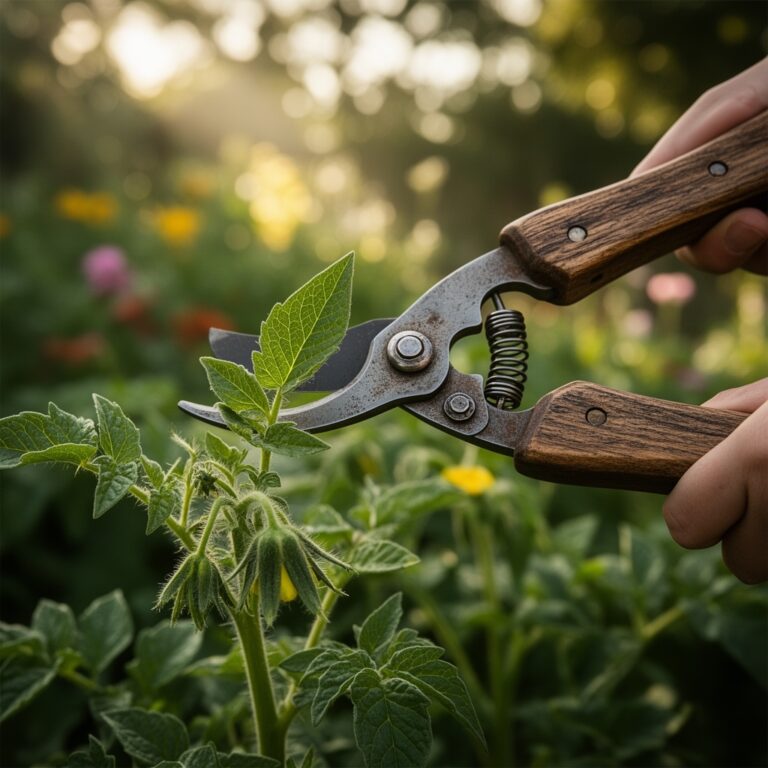
Prune summer-bearing raspberries immediately after harvest, removing all fruited canes at ground level. Fall-bearing varieties cut to ground level in late winter. Blueberries require minimal pruning until year four, then remove oldest canes annually to maintain seven productive stems.
Test soil annually in fall. Adjust amendments based on nutrient drawdown from harvest. Berry patches need sulfur reapplication every three years as soil pH drifts upward.
FAQ
How deep should I prepare soil for berries versus vegetables?
Berries need 18 inches of amended soil for perennial root systems. Annual vegetables require 12 inches. Double-digging improves drainage in clay soils but destroys structure in loam.
Can I grow berries and vegetables in the same bed?
No. pH requirements conflict. Berries acidify surrounding soil through leaf litter and root exudates. Maintain separate beds with three-foot buffers.
When do I see first harvests?
Vegetables produce 60 to 90 days from transplant. Strawberries fruit year one. Raspberries produce year two. Blueberries reach full production in year five.
What organic fertilizer ratio works for both plantings?
None universally applies. Use 4-4-4 NPK for vegetables and 4-3-4 NPK for berries. Berries need less phosphorus to prevent excessive vegetative growth at fruiting expense.
How do I prevent weed pressure long-term?
Maintain three inches of mulch year-round. Hand-pull weeds when soil moisture is high, removing entire root systems. Perennial weeds require cardboard barriers and six-inch mulch layers to suppress regrowth.