7 Aesthetic Steps to Prepare an Edible Landscape
Transforming raw soil into a functional edible landscape requires equal parts artistry and precision. Learning how to prepare a garden for an edible vegetable garden begins with understanding that ornamental beauty and food production occupy the same ecological niche when you manipulate light corridors, root zones, and nutrient cycling. The soil beneath your feet holds approximately 25 billion organisms per tablespoon, and your first act as designer is to feed them, not the plants.
Materials
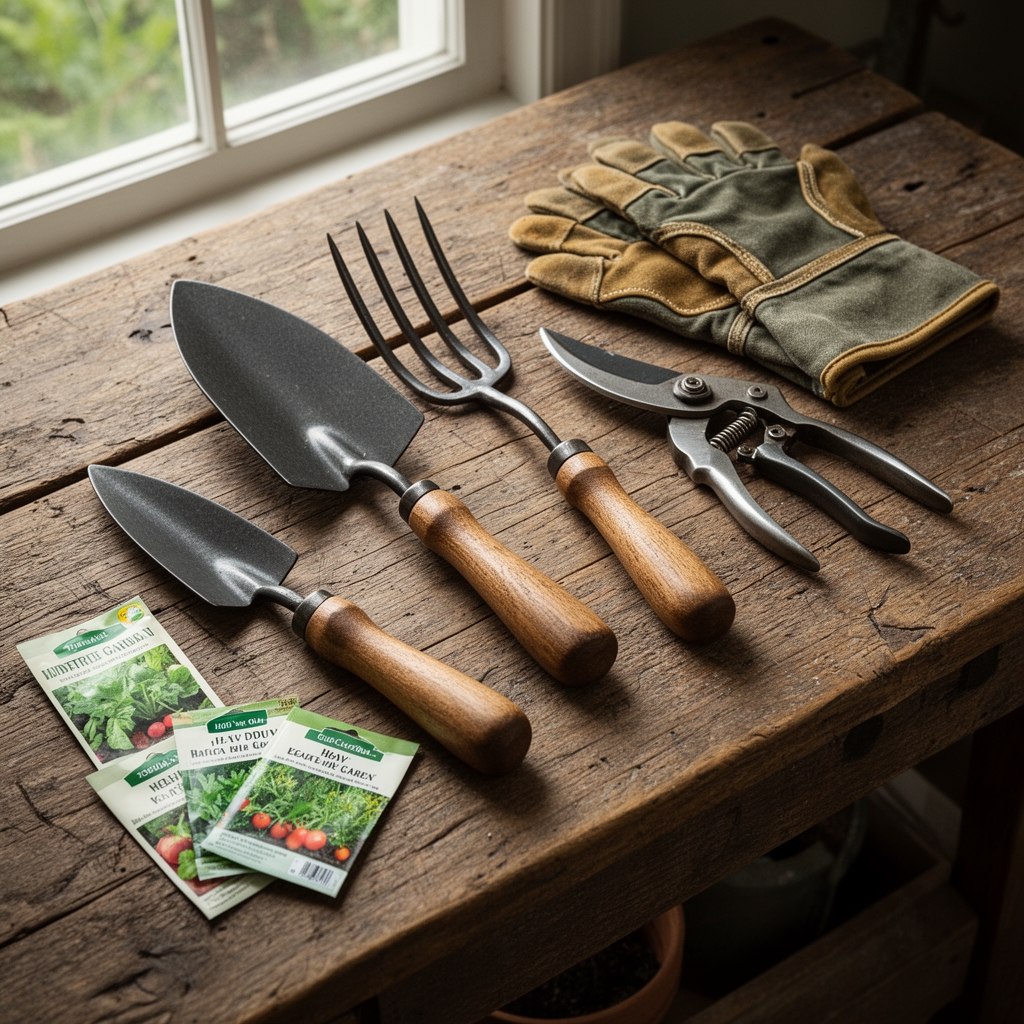
Assemble amendments based on baseline soil chemistry. Test pH first. Most vegetables thrive between 6.2 and 6.8. Blueberries and potatoes tolerate 4.5 to 5.5. Purchase a 4-4-4 organic meal (kelp, bone, and feather meal) for balanced slow-release fertility. Add dolomitic lime at 5 pounds per 100 square feet if pH drops below 6.0. Sulfur lowers pH by approximately 0.5 points per pound per 100 square feet.
Mycorrhizal fungi inoculant (Glomus intraradices or Rhizophagus irregularis) increases phosphorus uptake by 300 percent. Apply at transplant. Cation exchange capacity improves with compost aged 12 months minimum. Aim for 20 to 40 percent organic matter by volume in the top six inches. Purchase a broadfork, not a rototiller. Tilling destroys fungal networks and inverts anaerobic layers.
Acquire row cover (0.55-ounce weight) for frost protection and drip irrigation tape with 12-inch emitter spacing. Mulch choices include straw (not hay, which contains seeds), shredded hardwood bark at two inches depth, or living mulches like white clover seeded at four ounces per 1,000 square feet.
Timing
Hardiness zones govern frost windows. Zone 5 experiences last spring frost around May 15 and first fall frost near September 25. Zone 8 extends the window from March 20 to November 10. Cool-season crops (kale, lettuce, peas) germinate at soil temperatures of 40 to 65 degrees F. Warm-season crops (tomatoes, peppers, squash) require 60 to 85 degrees F.
Begin site preparation 60 days before the last expected frost. This allows cover crops like winter rye to decompose and release nitrogen. Transplant warm-season starts two weeks after the frost-free date when soil reaches 60 degrees F at four-inch depth. Use a soil thermometer at 8:00 a.m. for three consecutive days to confirm.
Fall gardens in zones 6 through 9 require sowing 10 to 12 weeks before the first frost. Succession planting every 14 days extends harvests. Spinach sown August 1 matures by mid-October. Carrots sown July 15 sweeten after light frosts.
Phases
Sowing
Direct-seed root vegetables and legumes. Carrots require light to germinate. Press seeds into contact with soil but leave uncovered. Beans need one-inch depth. Large seeds (squash, cucumber) perform best in hills: mounds eight inches high and 18 inches wide that warm faster than flat ground.
Mark rows with garden lime. Space based on mature canopy, not seedling size. Lettuce needs six inches; cabbage requires 18. Inter-plant fast and slow growers. Radishes harvested in 25 days mark rows for carrots that need 70.
Pro-Tip: Soak legume seeds in diluted liquid kelp (1 tablespoon per gallon) for four hours. Auxin distribution improves root initiation by 40 percent.
Transplanting
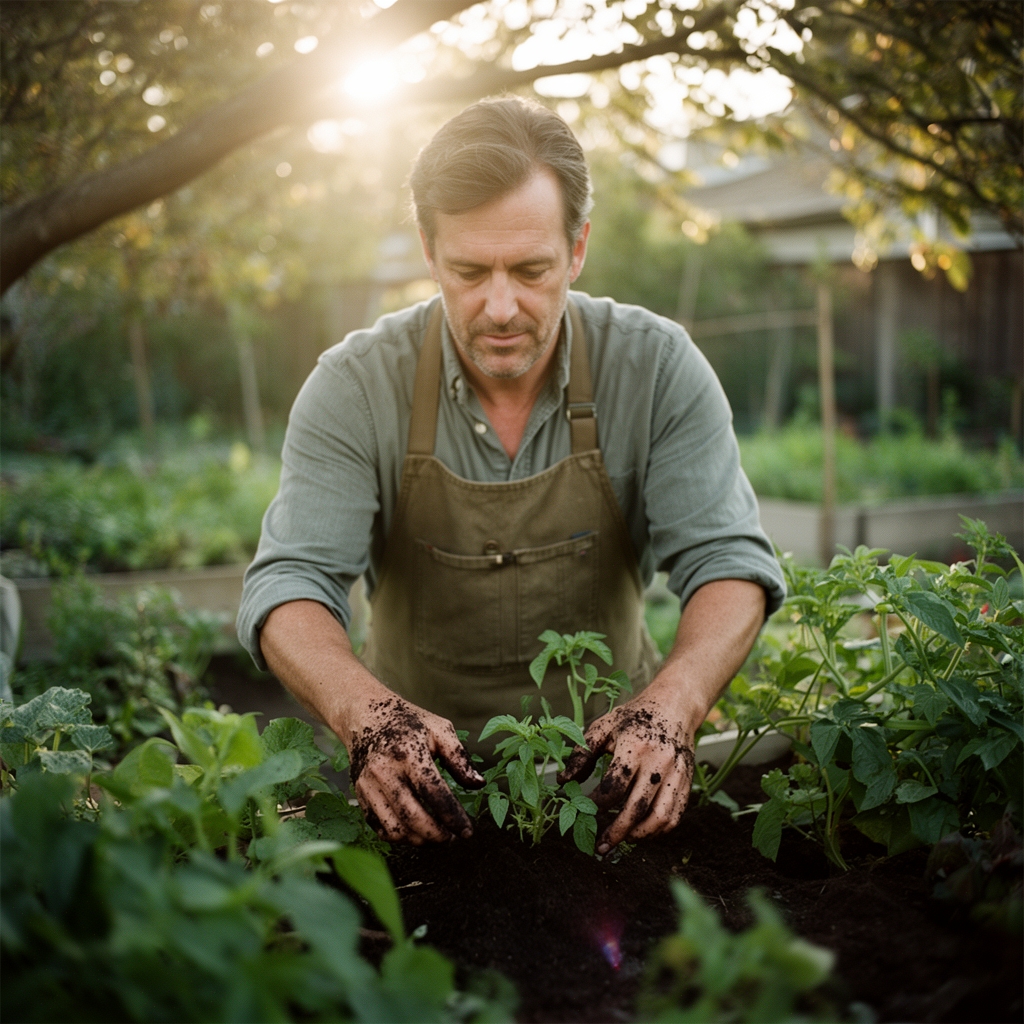
Harden off seedlings over seven days. Reduce water by half and expose to outdoor temperatures for increasing intervals. Dig holes twice the root ball width. Set transplants at the same depth they grew in containers except tomatoes. Bury tomato stems up to the first true leaves. Adventitious roots form along buried stems and increase nutrient uptake surface area by 60 percent.
Water transplants with compost tea (five pounds worm castings per five gallons, steeped 24 hours, aerated). Apply one cup per plant. This introduces beneficial bacteria to the rhizosphere.
Pro-Tip: Pinch terminal buds on basil and herbs at six inches height. This forces lateral branching at 45-degree angles and doubles harvest weight.
Establishing
Mulch after soil warms to 65 degrees F. Earlier mulching slows heat absorption. Apply two inches around plants, leaving a three-inch gap at stems to prevent rot. Living pathways of white clover fix 100 to 150 pounds of nitrogen per acre annually.
Install trellising at planting. Retrofitting damages roots. Cattle panel arches support cucumbers, beans, and peas. Space panels five feet apart. Train vines at 60-degree angles to maximize light interception and airflow.
Pro-Tip: Inoculate tomato roots with Trichoderma harzianum at transplant. This fungus colonizes root surfaces and blocks Fusarium wilt entry points.
Troubleshooting
Symptom: Blossom end rot on tomatoes and peppers. Dark, sunken spots on fruit bottoms.
Solution: Calcium deficiency from inconsistent watering. Apply gypsum at two pounds per 100 square feet. Maintain soil moisture at 60 to 70 percent field capacity.
Symptom: Powdery white coating on squash and cucumber leaves.
Solution: Powdery mildew thrives in humidity above 70 percent with poor airflow. Spray potassium bicarbonate (one tablespoon per gallon) weekly. Space plants 36 inches apart.
Symptom: Yellowing between leaf veins on younger leaves.
Solution: Iron chlorosis in alkaline soils above pH 7.2. Chelated iron foliar spray at 0.5 ounces per gallon corrects deficiency in five days.
Symptom: Holes in brassica leaves overnight.
Solution: Cabbage loopers or imported cabbageworm. Bacillus thuringiensis var. kurstaki applied at dusk kills larvae within 48 hours. Reapply after rain.
Symptom: Wilting despite wet soil.
Solution: Root rot from Phytophthora or Pythium in waterlogged, compacted soil. Improve drainage with a two-percent grade. Amend with perlite at 20 percent by volume.
Maintenance
Irrigate to deliver one inch of water per week, including rainfall. Measure with tuna cans placed in rows. Water at soil level before 9:00 a.m. to reduce foliar disease. Drip irrigation applies 0.6 gallons per hour per emitter. Run systems 90 minutes twice weekly in loam soils, three times in sand.
Side-dress heavy feeders (tomatoes, corn, brassicas) with 4-4-4 at four weeks after transplant. Apply one-quarter cup per plant in a six-inch circle around the stem. Foliar feed micronutrients (kelp extract at two tablespoons per gallon) every 14 days.
Prune indeterminate tomatoes to one or two leaders. Remove suckers when smaller than four inches. This concentrates energy into fruit rather than foliage. Harvest leafy greens in the morning when turgor pressure peaks.
FAQ
How deep should I prepare soil for root vegetables?
Loosen soil to 12 inches for carrots and beets, 18 inches for parsnips. Use a broadfork to lift and aerate without inverting layers.
Can I plant perennials with annuals?
Yes. Position perennials (asparagus, rhubarb, artichokes) on the north side to avoid shading annuals. They occupy space for 10 to 20 years.
What spacing prevents disease?
Air circulation reduces fungal pressure. Space tomatoes 36 inches apart, cucumbers 24 inches, lettuce 8 inches. Vertical training adds 30 percent more planting density.
When do I rotate crop families?
Rotate every season. Never plant Solanaceae (tomatoes, peppers, eggplants) or Brassicaceae (cabbage, broccoli, kale) in the same bed for three years. This breaks pest and disease cycles.
How do I extend the season?
Low tunnels with row cover add four weeks in spring and fall. Hoop frames with six-mil greenhouse plastic protect crops to 28 degrees F. Cold frames against south-facing walls grow greens through winter in zones 6 and warmer.