9 Fine Seedbed Tips: Using a Garden Rake for Small Veggie Seeds
The steel tines of a properly wielded rake transform clumpy soil into a surface so uniform that carrot seeds and lettuce grains fall into position like ball bearings on velvet. Using a garden rake for vegetable seedbeds determines whether those tiny seeds germinate in neat rows or disappear into air pockets and crusted clods. The difference between a 40% emergence rate and a 90% stand begins with rake angle, tine pressure, and a soil structure refined to pea-sized aggregates.
Materials
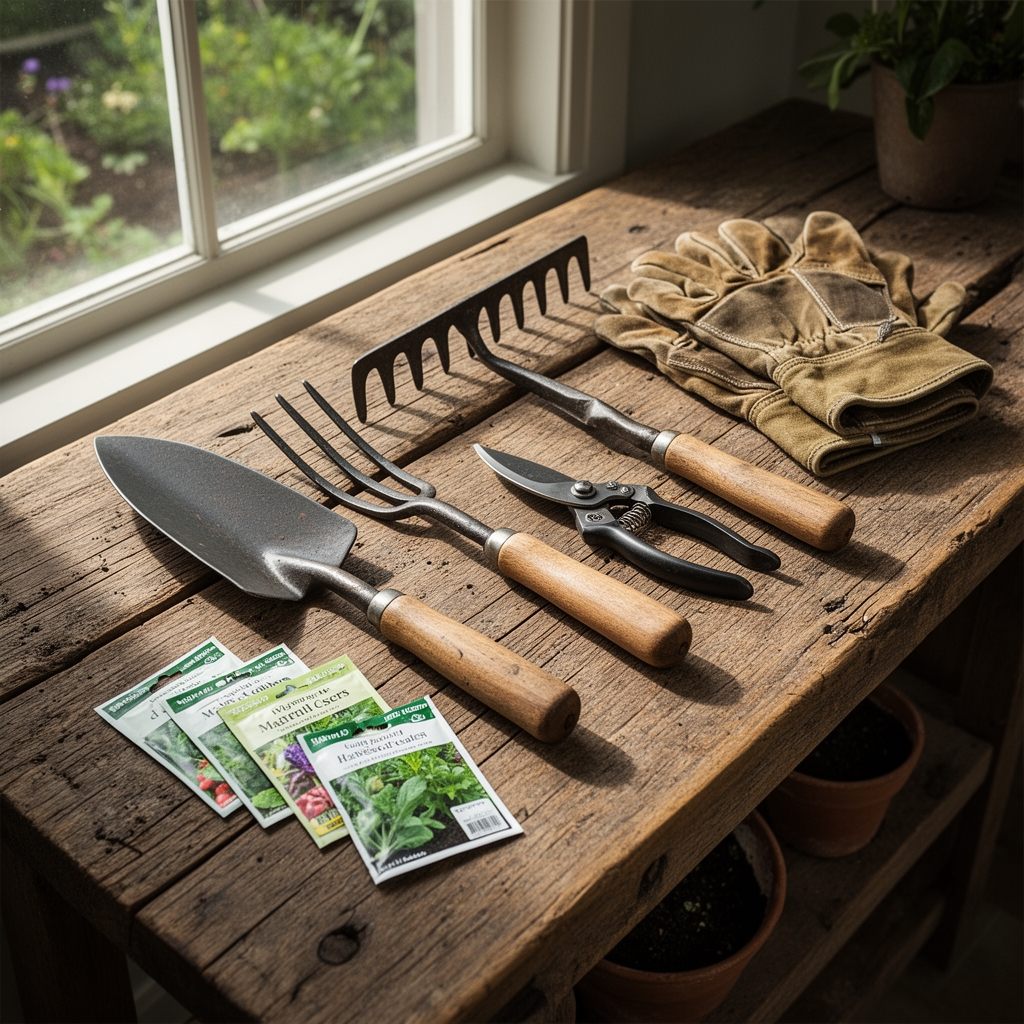
Select a bow rake with 14 to 16 straight steel tines spaced 0.75 inches apart. The head should measure 14 to 16 inches across. Avoid aluminum models; they lack the weight needed to break aggregates efficiently.
Amend soil to pH 6.0–7.0 for most vegetable crops. Brassicas tolerate 6.5–7.5, while potatoes prefer 5.0–6.0 to limit scab incidence. Incorporate a balanced organic fertilizer at 4-4-4 or 5-5-5 NPK analysis, applied at 2 pounds per 100 square feet. Composted manure aged 12 months or longer supplies slow-release nitrogen without excess salts that inhibit germination. Blood meal (12-0-0) and bone meal (3-15-0) provide targeted nutrient bursts if soil tests indicate deficiencies.
Till or broadfork the bed to 8 inches deep two weeks before sowing. Allow clods to dry and weather. This pre-weathering reduces the number of rake passes required and preserves soil structure. Spread 1 inch of finished compost (C:N ratio below 20:1) across the surface. The cation exchange capacity of mature compost buffers pH swings and improves seed-to-soil contact.
Timing
Begin seedbed preparation when soil temperature reaches 50°F at 2-inch depth for cool-season crops and 60°F for warm-season varieties. In Zone 5, this translates to late April for peas and spinach, mid-May for beans and squash. Zone 7 gardeners can sow lettuce and radishes by mid-March; Zone 9 permits year-round succession planting of greens with shade cloth during summer peaks.
Rake final seedbeds within 48 hours of sowing. Freshly raked soil retains moisture in capillary pores; waiting longer allows surface desiccation that forms a crust impermeable to radicle emergence. Check the 10-day forecast. Avoid raking before heavy rain, which compacts fine tilth into hardpan.
Phases

Sowing Phase
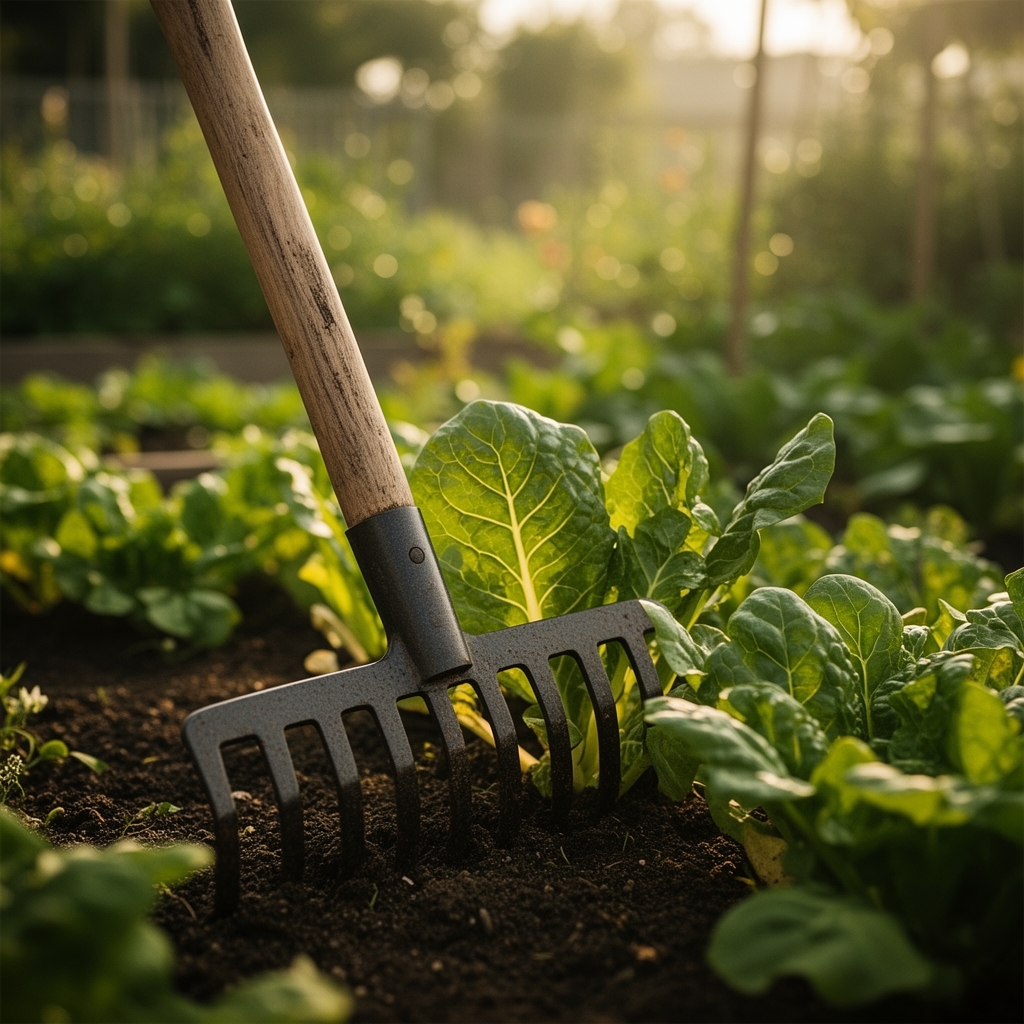
Hold the rake at 30 degrees to the soil surface. Push forward with even pressure, allowing tine tips to penetrate 0.5 inches. Pull back at the same angle. Repeat in perpendicular passes until no clods larger than a dime remain. The objective is a loose, level surface where a seed dropped from 6 inches settles no more than 0.25 inches.
Create shallow furrows by inverting the rake and drawing the handle end through the bed. For lettuce and carrot, cut grooves 0.25 inches deep. Beet and chard require 0.5 inches. Parsnip and parsley, notoriously slow germinators, benefit from 0.75-inch depth to maintain moisture contact during the 21-day emergence window.
Pro-Tip: Dust furrows with mycorrhizal inoculant (Rhizophagus irregularis at 0.1 ounce per 10 row-feet) before seeding. The fungi colonize root hairs within 10 days, increasing phosphorus uptake by 40% in low-P soils.
Transplanting Phase
Rake planting stations rather than entire beds for transplants. Clear a 6-inch diameter circle to bare mineral soil. This eliminates competition from weed seeds in the top inch and warms the microsite 3°F faster than mulched ground. Space circles 12 inches apart for lettuce, 18 inches for broccoli, 24 inches for tomatoes.
Pro-Tip: Tilt transplants 15 degrees toward the south at installation. Auxin distribution redirects the main stem upright within 72 hours, while roots establish radially in loosened soil rather than spiraling in the plug shape.
Establishing Phase
Rake lightly between rows at 14 days post-emergence. Drag tines 0.25 inches deep to sever germinating weed seedlings without disturbing vegetable roots, which extend 2 inches by this stage. This shallow cultivation substitutes for herbicides and prevents the weed seed bank from maturing.
Pro-Tip: Apply kelp extract foliar spray (diluted 1:500) at the two-true-leaf stage. Cytokinins in kelp accelerate lateral root formation and increase stress tolerance during establishment.
Troubleshooting
Symptom: Seedlings emerge in patches with bare gaps.
Solution: Soil crusting from raindrop impact. Rake surface again to 0.125-inch depth immediately after rain, then re-seed gaps.
Symptom: Seedlings topple at soil line (damping-off).
Solution: Excess nitrogen or waterlogged conditions favor Pythium and Rhizoctonia fungi. Reduce pre-plant fertilizer to 2-2-2 NPK and improve drainage with coarse sand at 1 part per 4 parts soil.
Symptom: Germination delayed beyond expected range.
Solution: Compacted subsurface layer restricts root penetration. Broadfork to 10 inches before raking to fracture plow pan.
Symptom: Flea beetles riddle cotyledons with shot-hole damage.
Solution: Cover seeded rows with insect netting (0.6 mm mesh) immediately after raking. Remove at flowering for crops requiring pollination.
Symptom: Uneven plant height across bed.
Solution: Inconsistent soil depth from incomplete raking. Use a 4-foot straightedge to check level; high spots dry faster and stunt growth.
Maintenance
Irrigate new seedbeds with 0.5 inches of water every 48 hours until emergence, then 1 inch per week. Use a rain gauge to measure actual delivery. Overhead sprinklers work for greens; switch to drip tape for fruiting crops to limit foliar diseases.
Rake inter-row paths every 10 days through Week 6. Cease cultivation when root systems overlap to avoid pruning feeder roots.
Side-dress with compost tea (aerated 24 hours, diluted 1:4) at 1 quart per row-foot biweekly. The soluble nutrients bypass slow mineralization and supply nitrogen as plants transition from vegetative to reproductive phases.
FAQ
How often should I replace my garden rake?
Every 5 to 7 years with moderate use. Inspect tines for bends or stress fractures annually. A warped rake creates uneven furrows.
Can I rake wet soil?
No. Soil at field capacity smears into anaerobic clumps. Wait until a handful crumbles when squeezed, typically 24 to 48 hours after rain.
What rake width suits a 30-inch bed?
A 16-inch head allows two overlapping passes. Wider rakes extend beyond bed edges and compact pathways.
Do I need different rakes for clay versus sand?
Same tool, adjusted technique. Clay requires lighter pressure to avoid pulverizing structure. Sandy loam tolerates aggressive raking without compaction risk.
How fine is too fine?
Stop when 80% of particles measure 0.125 to 0.25 inches. Dust-fine soil crusts irreversibly and washes away in rain.