6 Bog Garden Steps to Prepare a Garden for Edible Varieties
How to prepare a garden for a bog vegetable garden requires understanding that waterlogged, acidic soils support unique crops like watercress, cranberries, taro, and certain cultivars of rice. Traditional garden beds drain freely, but bog systems maintain saturated conditions with pH values between 4.5 and 6.0. Permanent water tables encourage specialized root structures that tolerate anaerobic zones. The initial preparation determines whether roots access oxygen through aerenchyma tissue or suffocate in compacted clay.
Materials
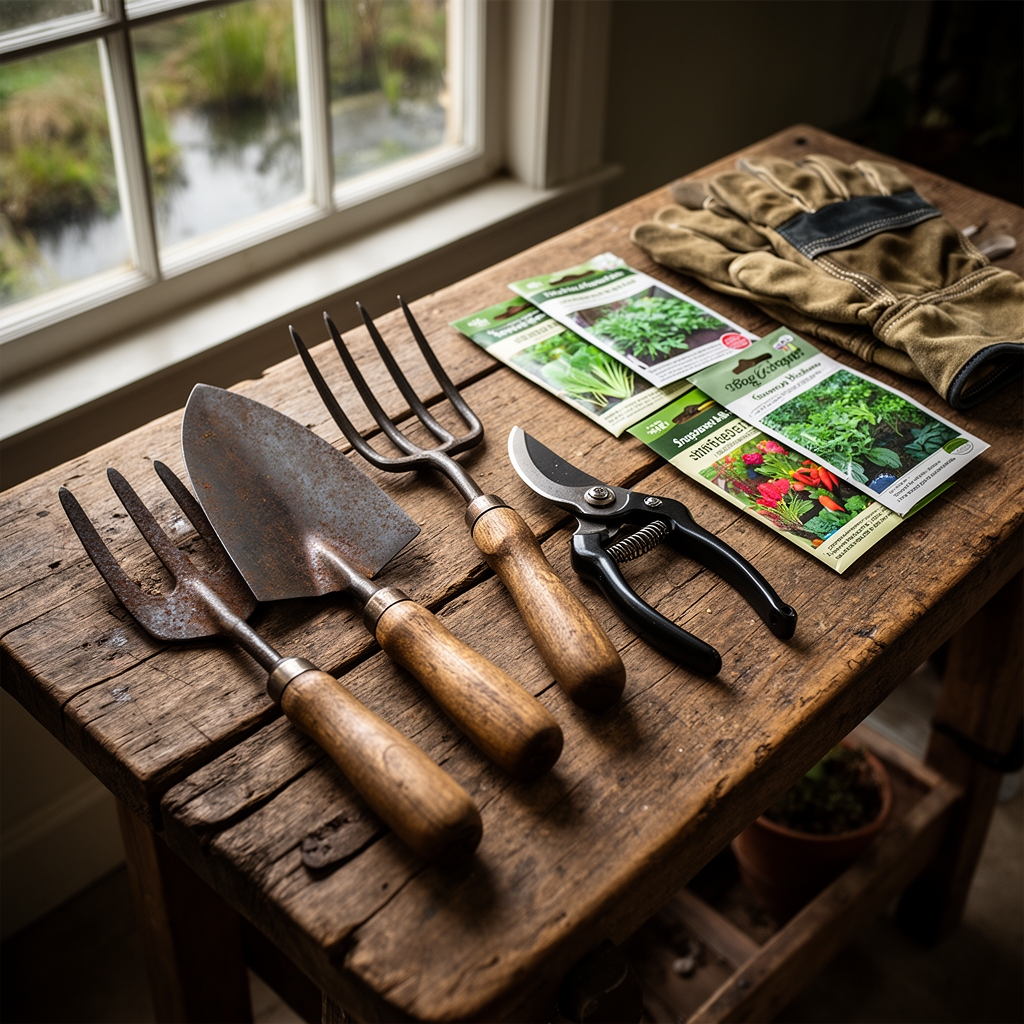
Select an impermeable liner rated for UV exposure if constructing a raised bog. EPDM rubber (45-mil thickness) or bentonite clay layers prevent lateral drainage. Sphagnum peat moss lowers pH to 4.5–5.5 when blended at a 60:40 ratio with coarse sand. This mixture supports cation exchange capacity of 110–130 meq/100g, adequate for slow-release nutrient retention.
Acidifying amendments include elemental sulfur (90% purity) applied at 0.5 pounds per 100 square feet to drop pH by one full point over 90 days. Cottonseed meal (6-2-1 NPK) provides nitrogen without raising alkalinity. Avoid lime, wood ash, or manures exceeding 7.0 pH.
Organic fertilizers suitable for acid-loving crops include feather meal (12-0-0), bone meal (3-15-0), and kelp meal (1-0.5-2.5). A balanced 4-4-4 granular blend applied at planting provides macronutrients without shocking sensitive root hairs. Chelated iron (Fe-EDDHA) corrects chlorosis in watercress and taro when foliar-sprayed at 0.25 ounces per gallon every 14 days.
Water sources must be low in dissolved salts. Municipal tap water often carries 150–300 ppm total dissolved solids and chlorine residues. Rainwater collection or reverse-osmosis filtration reduces TDS below 50 ppm, preventing salt accumulation in perpetually moist substrates.
Timing
Hardiness Zones 6–10 support year-round bog systems with insulated liners. Zones 3–5 require 12-inch mulch layers or greenhouse protection to prevent freeze-thaw cycles that rupture cell walls in submerged roots.
Begin excavation 6–8 weeks before the last expected frost date. Soil temperatures must reach 50°F at 4-inch depth for warm-season crops like taro. Cool-season watercress germinates at 45°F and tolerates transplanting 3 weeks before frost.
Spring preparation allows microbial colonization of peat substrates. Mycorrhizal fungi establish symbiotic relationships within 30–45 days, improving phosphorus uptake in low-nutrient bogs. Autumn planting suits cranberries, which require 60 days of root establishment before winter dormancy.
Phases

Sowing
Direct-seed watercress by broadcasting 1 gram per square foot onto saturated peat. Seeds require light for germination; press gently without covering. Maintain 1–2 inches of standing water once radicles emerge at day 5–7.
Cranberry cuttings (4–6 inches long) root directly in flooded substrates. Strip lower leaves and insert nodes 2 inches deep. Auxin distribution concentrates at wounded sites, promoting adventitious roots within 21 days.
Pro-Tip: Inoculate peat with Rhizophagus irregularis spores at 10 grams per cubic foot during mixing. This arbuscular mycorrhizal species colonizes 80% of bog-adapted crops and increases nitrogen fixation by 35%.
Transplanting
Harden seedlings for 7 days by gradually increasing water levels from moist to 1-inch depth. Transplant watercress plugs 6 inches apart in staggered rows. Taro corms require 18-inch spacing to accommodate 24-inch leaf spread.
Submerge root crowns 1–3 inches below the waterline. Deeper placement encourages taller stems but reduces leaf production. Shallow crowns risk desiccation during evapotranspiration peaks in July and August.
Pro-Tip: Apply liquid kelp (0-0-1 NPK plus cytokinins) at transplanting. Dilute 2 tablespoons per gallon and water into root zones. Cytokinins stimulate lateral root branching, doubling root mass within 14 days.
Establishing
Maintain water levels at 2–4 inches for 6 weeks post-transplant. Automated float valves connected to rainwater cisterns stabilize fluctuations. Evaporation rates reach 0.25 inches per day in full sun, requiring daily monitoring until roots anchor.
Mulch exposed peat surfaces with 1 inch of shredded pine bark to prevent algae blooms. Algae compete for dissolved nutrients and reduce oxygen availability at night through respiration.
Pro-Tip: Install aeration tubes (1-inch PVC perforated every 6 inches) vertically into the substrate at 24-inch intervals. Passive air exchange prevents anaerobic pockets that generate hydrogen sulfide, toxic to root hairs at concentrations above 0.5 ppm.
Troubleshooting
Symptom: Yellowing leaves with green veins (interveinal chlorosis) in watercress.
Solution: Iron deficiency caused by pH drift above 6.5. Apply chelated iron foliar spray and add sulfur to lower substrate pH.
Symptom: Black, mushy roots with sulfur odor.
Solution: Anaerobic root rot from stagnant water. Install aeration tubes and reduce water depth to 1 inch until new white roots appear.
Symptom: Stunted growth and purple leaf undersides.
Solution: Phosphorus lockout in pH below 4.5. Raise pH to 5.0 using dolomitic lime at 0.25 pounds per 100 square feet.
Symptom: Wilting despite saturated soil.
Solution: Salt accumulation from hard water. Flush system with rainwater at 3 times the substrate volume, then refill with low-TDS water.
Symptom: Holes in leaves with slime trails.
Solution: Aquatic snails feeding nocturnally. Hand-remove adults and submerge copper strips (99% purity) around bed perimeters. Copper ions deter mollusks at 0.1 ppm without harming plants.
Maintenance
Apply 4-4-4 granular fertilizer at 1 tablespoon per square foot every 6 weeks during active growth. Broadcast over water surface; granules sink and dissolve within 48 hours.
Monitor water levels daily during establishment, then twice weekly once roots anchor. Refill when depth drops below 1 inch. Summer heat increases evapotranspiration to 0.3 inches per day.
Test pH monthly using a soil probe calibrated for saturated media. Adjust with sulfur (to lower) or lime (to raise) in 0.2-point increments. Rapid shifts stress root systems adapted to stable acidity.
Harvest watercress by cutting stems 2 inches above crowns every 3–4 weeks. Regrowth occurs within 10 days when water temperature stays between 50–70°F.
Drain bogs annually in late autumn to inspect liner integrity and remove decomposed organic matter. Refill and re-inoculate with mycorrhizae before spring planting.
FAQ
Can I grow tomatoes in a bog garden?
No. Tomatoes require well-drained soil and pH 6.0–6.8. Continuous saturation causes root rot and calcium uptake disorders.
How deep should a bog bed be?
Minimum 12 inches for shallow-rooted crops like watercress. Taro requires 18–24 inches to accommodate corm expansion.
What water temperature is ideal?
55–68°F optimizes nutrient uptake and microbial activity. Temperatures above 75°F reduce dissolved oxygen and stress cool-season crops.
Do I need a pump?
Not required for static bogs. Circulation pumps benefit systems exceeding 50 square feet by preventing thermal stratification and distributing nutrients.
How long does preparation take?
6–8 weeks from excavation to first planting. This includes liner installation, substrate mixing, pH adjustment, and microbial colonization periods.