9 Layout Steps to Prepare a Fruit and Vegetable Garden
The smell of turned earth in early spring signals opportunity. Knowing how to prepare a garden for a fruit and vegetable garden begins with deliberate site selection and soil structure. A mature food garden produces 0.5 to 1.2 pounds of produce per square foot annually when underlying conditions support root colonization and nutrient cycling. The difference between marginal yields and abundance lies in the layout decisions made before any seed touches soil.
Materials

Foundation amendments determine cation exchange capacity and long-term fertility. For beds targeting a pH of 6.2 to 6.8, incorporate dolomitic lime at 5 pounds per 100 square feet if initial tests show pH below 5.8. Acidic-preferring crops like blueberries require sulfur additions at 1 pound per 100 square feet to lower pH to 4.5 to 5.2.
Base fertility comes from aged compost at 2 to 3 inches depth, delivering approximately 1-1-1 NPK. Supplement with a 4-4-4 organic meal blend at 3 pounds per 100 square feet for balanced nutrition. Blood meal (12-0-0) addresses nitrogen deficiency in legume-free rotations. Bone meal (3-15-0) supports fruiting crops. Kelp meal (1-0.5-2.5) provides trace minerals and cytokinins that regulate cell division.
For mycorrhizal colonization, source endo-mycorrhizal inoculant containing Glomus intraradices at 1 ounce per transplant hole. Mulch materials include straw at 3 to 4 inches depth or shredded hardwood bark at 2 inches for weed suppression and moisture retention.
Timing
Understanding how to prepare a garden for a fruit and vegetable garden requires mapping tasks to USDA Hardiness Zones and last frost probability. In Zones 3 through 5, soil preparation begins when ground temperatures reach 45°F at 4-inch depth, typically mid-April to early May. Zones 6 through 8 allow March starts. Zones 9 and 10 permit year-round cultivation with seasonal rotation.
Calculate last spring frost date using 30-year averages. Begin indoor seed starts 6 to 8 weeks prior for tomatoes, peppers, and eggplants. Direct-sow cool-season crops like peas, lettuce, and brassicas 2 to 4 weeks before last frost when soil reaches 40°F. Warm-season transplants enter beds only after consistent 55°F nighttime air temperatures.
Fall gardens in northern zones require sowing 10 to 12 weeks before first autumn frost. Southern growers plant cool-season crops from September through November.
Phases
Sowing Phase
Remove existing vegetation via solarization using clear 4-mil plastic sheeted over moist soil for 4 to 6 weeks during peak summer heat. This method raises soil temperature to 140°F at 2-inch depth, eliminating weed seeds and soilborne pathogens without herbicides.
Establish bed geometry with 3 to 4-foot widths for accessibility. Create permanent paths 18 to 24 inches wide using compacted mulch or paver stones. Raised beds 8 to 12 inches high improve drainage in clay soils.
Pro-Tip: Mix inoculant powder with water to form slurry. Coat legume seeds (peas, beans) 30 minutes before planting to introduce Rhizobium bacteria that fix atmospheric nitrogen at 2 to 3 pounds per 100 square feet per season.
Transplanting Phase
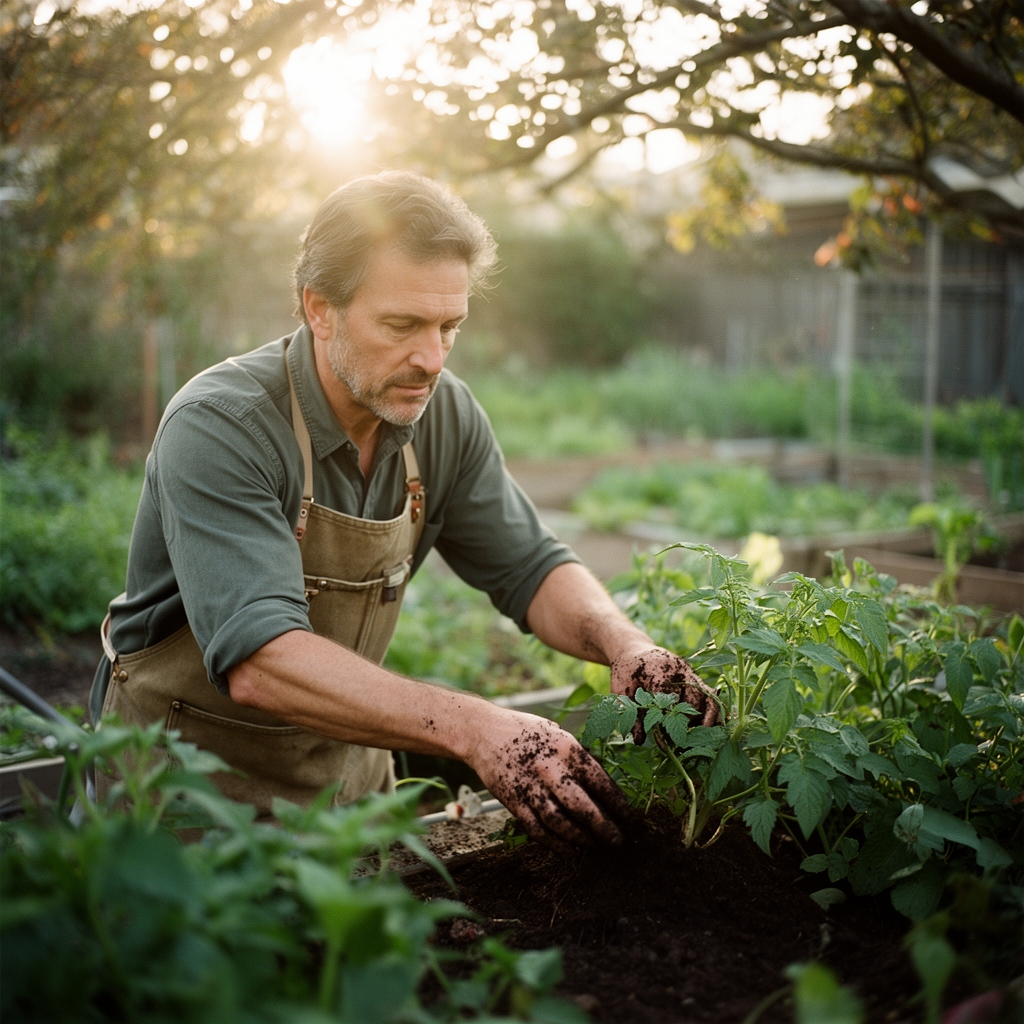
Harden off seedlings over 7 to 10 days by gradually increasing outdoor exposure. This process thickens cuticle layers and reduces transplant shock. Dig holes 1.5 times root ball width. Position transplants at the same depth as container soil line, except tomatoes, which benefit from burial to first true leaves for adventitious root development.
Water transplants with diluted fish emulsion (5-1-1) at half-strength to stimulate auxin distribution. Apply 1 cup per plant at base.
Pro-Tip: Plant tomatoes at a 30-degree angle when stems exceed 10 inches. Lay stem horizontally in trench, covering lower 4 to 6 inches with soil. Upturned growth tip reorients vertically within 3 days while buried stem generates extensive lateral roots.
Establishing Phase
Monitor soil moisture with a probe to maintain consistent levels at 6-inch depth. Fluctuating moisture causes blossom-end rot in tomatoes and cracking in root vegetables. Drip irrigation delivers water at 0.6 gallons per hour per emitter, maintaining even distribution.
Apply 2 to 3 inches of organic mulch around established plants, keeping 2-inch clearance from stems to prevent crown rot. Mulch moderates soil temperature by 10 to 15°F and reduces evaporation by 25 percent.
Pro-Tip: Install reflective aluminum mulch beneath cucurbit crops (squash, cucumbers, melons) to increase photosynthetically active radiation on lower leaf surfaces and repel aphids through light disruption.
Troubleshooting
Symptom: Interveinal chlorosis on young leaves.
Solution: Iron deficiency caused by high pH. Apply chelated iron (Fe-EDDHA) foliar spray at 1 tablespoon per gallon. Lower soil pH with elemental sulfur long-term.
Symptom: Curled, sticky leaves with honeydew residue.
Solution: Aphid infestation. Release Aphidius colemani parasitoid wasps at 1 per square foot or spray insecticidal soap (potassium salts of fatty acids) at 2 percent solution every 5 days.
Symptom: Blossom drop without fruit set in peppers and tomatoes.
Solution: Temperature stress. Night temperatures above 75°F or below 55°F disrupt pollen viability. Provide shade cloth (30 percent density) in extreme heat or row covers during cold snaps.
Symptom: Powdery white coating on leaf surfaces.
Solution: Powdery mildew (Erysiphe cichoracearum). Spray potassium bicarbonate solution (1 tablespoon per gallon plus 1 teaspoon horticultural oil) weekly. Ensure 6-inch plant spacing for airflow.
Symptom: Wilting despite adequate soil moisture.
Solution: Verticillium or Fusarium wilt. Remove infected plants immediately. Solarize beds. Rotate to non-susceptible families for 4 years. Use resistant cultivars marked VF on seed packets.
Maintenance
Deliver 1 to 1.5 inches of water weekly through single deep irrigation rather than frequent shallow watering. This promotes roots to 12-inch depth. Measure using rain gauge or empty tuna cans placed in beds.
Side-dress heavy feeders (tomatoes, corn, brassicas) with 5-10-10 granular fertilizer at 2 tablespoons per plant every 4 weeks during active growth. Scratch into soil 4 inches from stem base and water thoroughly.
Scout for pests twice weekly. Hand-pick hornworms, Japanese beetles, and squash bugs into soapy water. Deploy yellow sticky traps at 1 per 20 square feet to monitor thrips and whiteflies.
Prune indeterminate tomatoes to single or double leaders by removing suckers when 2 inches long. This concentrates auxin flow and improves fruit size.
FAQ
When should I start preparing garden beds?
Begin 4 to 6 weeks before planting date. This allows amendments to integrate and microbial populations to stabilize.
What is the ideal garden bed size?
Four feet wide permits access from both sides without compacting interior soil. Length varies by space availability.
How deep should garden soil be prepared?
Work soil to 8 to 12 inches for annual vegetables. Fruit trees and deep-rooted crops benefit from 18 to 24-inch preparation.
Can I plant vegetables in the same spot yearly?
Rotate plant families (Solanaceae, Brassicaceae, Fabaceae, Cucurbitaceae) on 3 to 4-year cycles to prevent pathogen buildup and nutrient depletion.
What spacing do vegetables need?
Tomatoes require 24 to 36 inches. Lettuce needs 6 to 8 inches. Consult seed packets for variety-specific requirements based on mature canopy spread.